How AI Helps Landlords Review Property Changes Faster
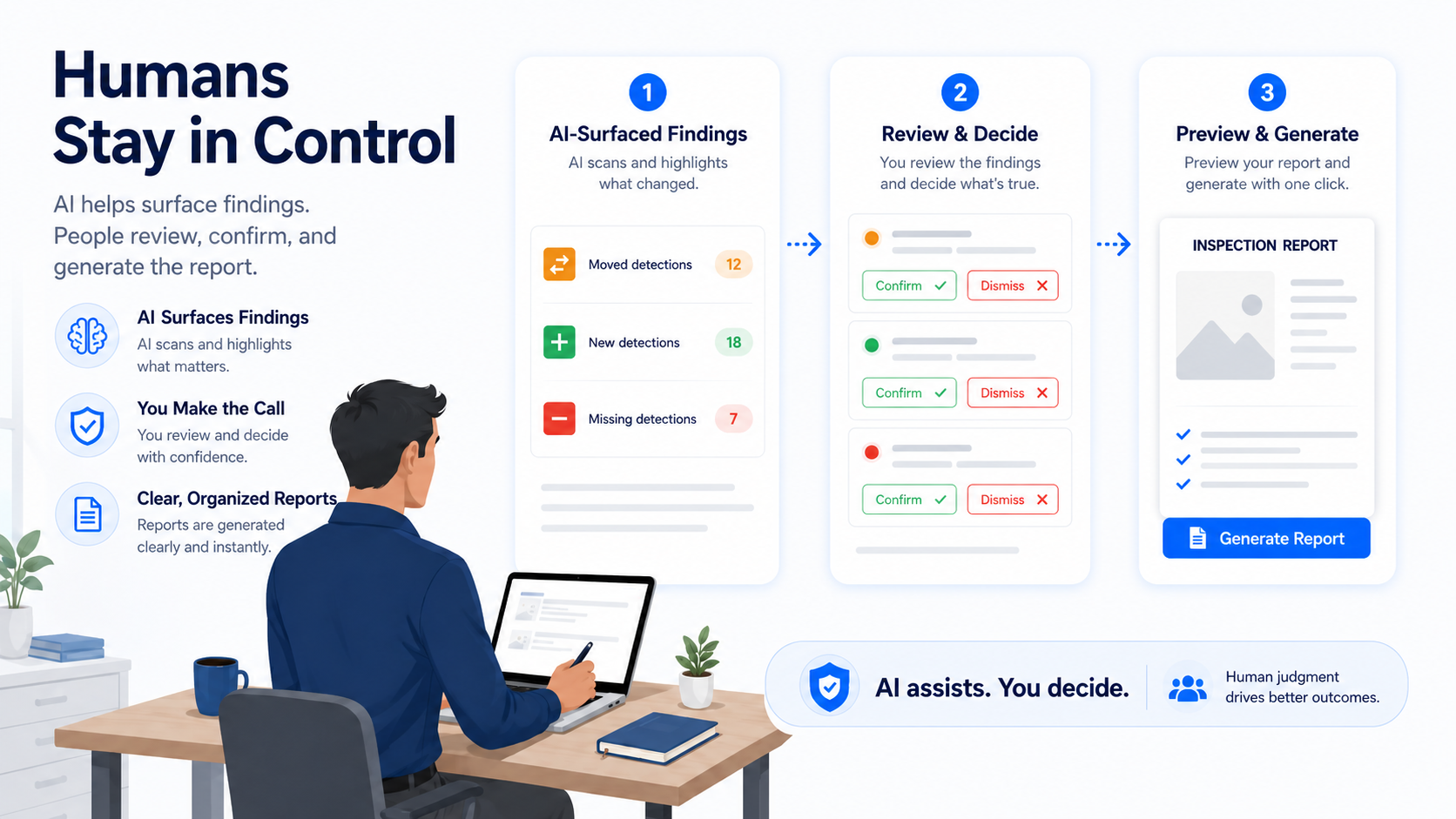
AI does not replace the landlord’s judgment. It helps review before-and-after inspection records faster by surfacing visual changes, ranking what needs attention, and letting humans confirm the final findings.
Rental inspections create a lot of visual information.
A move-in inspection may capture every room, wall, fixture, appliance, floor, cabinet, and included item. A move-out inspection may capture those same rooms again. That is exactly what makes the record useful.
But it also creates a problem.
Someone has to review it.
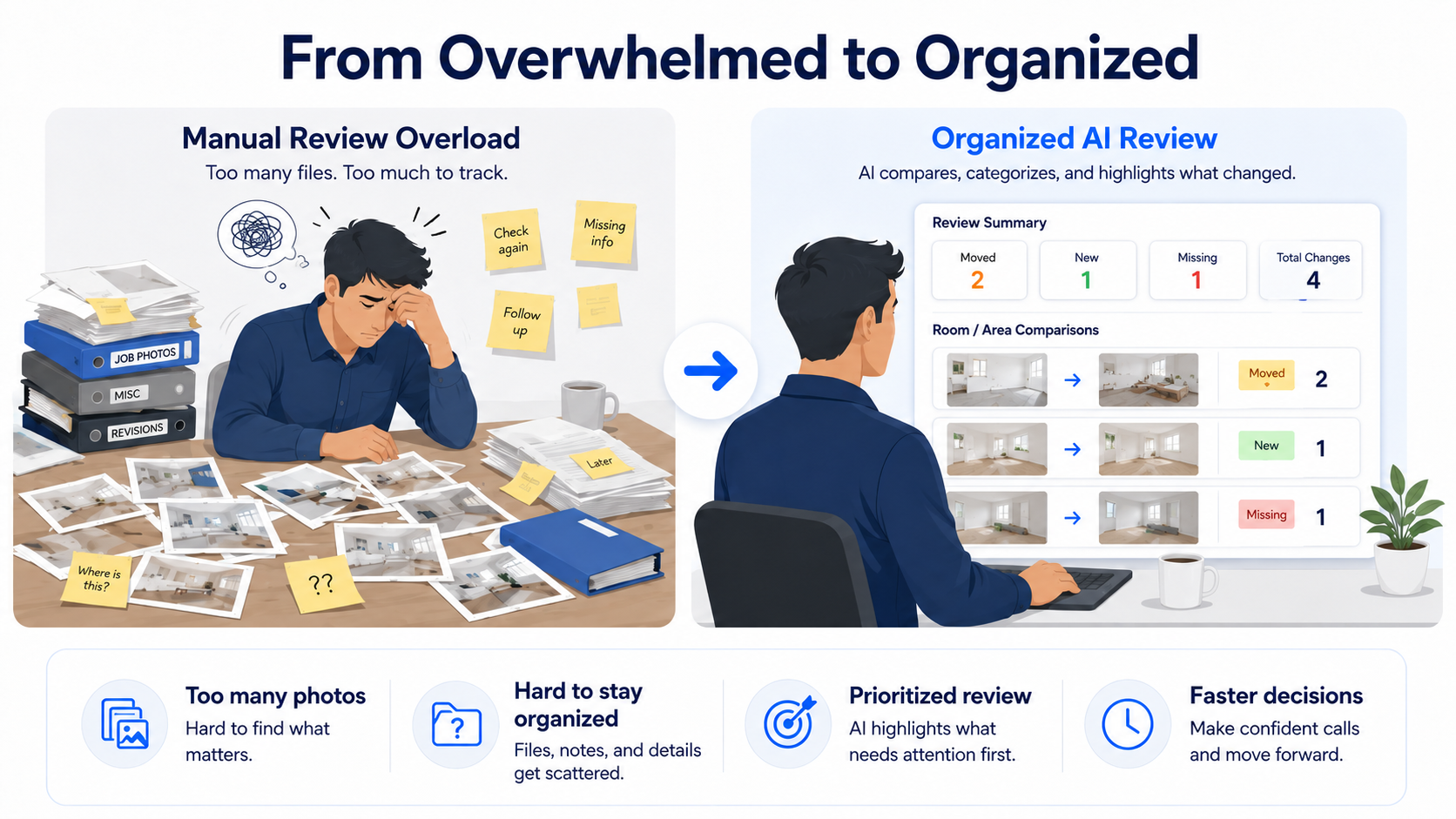
Manually comparing before-and-after inspection images can become slow, repetitive, and easy to miss. The more rooms, properties, tenants, staff members, or inspections you manage, the harder it becomes to review everything carefully.
That is where AI-assisted review helps.
PropCheckAI is designed to help users compare move-in and move-out records faster by surfacing visual change categories, ranking areas by change activity, and keeping the final decision in human hands.
The goal is simple:
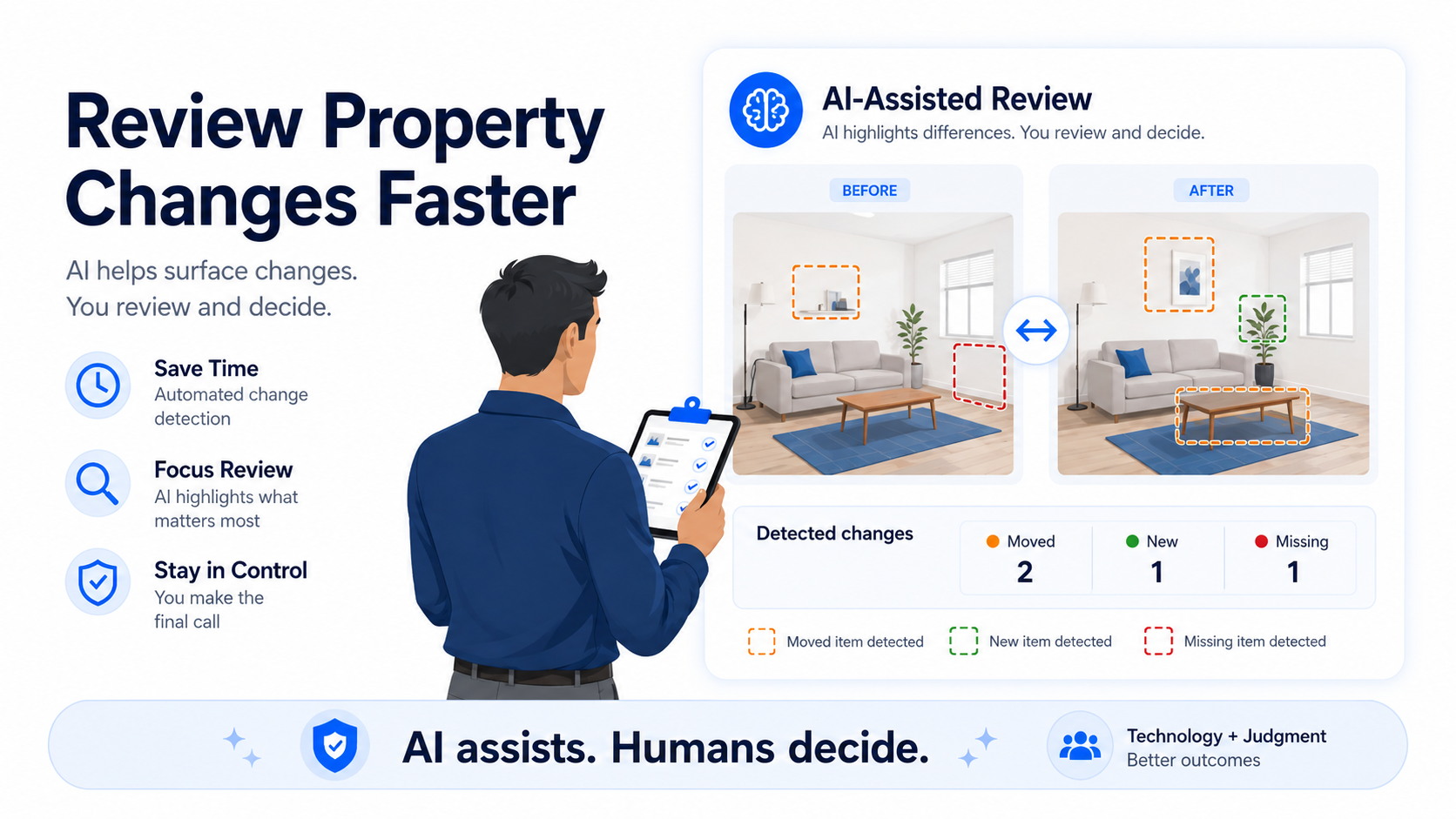
AI helps surface changes. Humans review and decide.
The real bottleneck is not capture. It is review.
Taking inspection photos is only the first part of the job. The harder part comes later, when someone needs to compare the move-in condition against the move-out condition.
A small apartment can easily create dozens of images. A larger property can create hundreds of frames across rooms, angles, and inspection types.
Manual review can become painful because the reviewer has to ask the same questions again and again:
Did this room change?
Was this item here before?
Did something move?
Is something new?
Is something missing?
Does this area need review?
Should this be included in the report?
Doing that once is manageable. Doing it across many rooms, many properties, and many inspections becomes exhausting.
That is why PropCheckAI focuses on structured visual comparison. The app is not just about capturing records. It is about making those records easier to review.
Why manual comparison breaks down
Manual inspection review sounds simple until there is too much to compare.
A landlord may open one folder for move-in photos and another folder for move-out photos. Then they try to match the same room, same angle, and same area by eye.
This takes time. It also creates review fatigue. When someone is tired, rushed, or reviewing too many images, it becomes easier to miss small but important changes.
Common manual review problems include:
too many photos to compare
photos stored in different folders
inconsistent angles
missing room labels
similar-looking rooms
no quick way to rank what changed most
no clear connection between findings and reports
The result is a slow workflow. The landlord may spend the same amount of time reviewing a clean room as a room with obvious changes. That is not efficient.
A smarter review process should help the user focus attention where it matters most.
AI-assisted review helps surface visual changes
PropCheckAI uses AI-assisted comparison to help review before-and-after inspection records. The app can compare visual records and surface change activity so the user does not have to manually search through every frame with the same level of effort.
The important word is assist. AI helps highlight possible changes. It does not make the final decision.
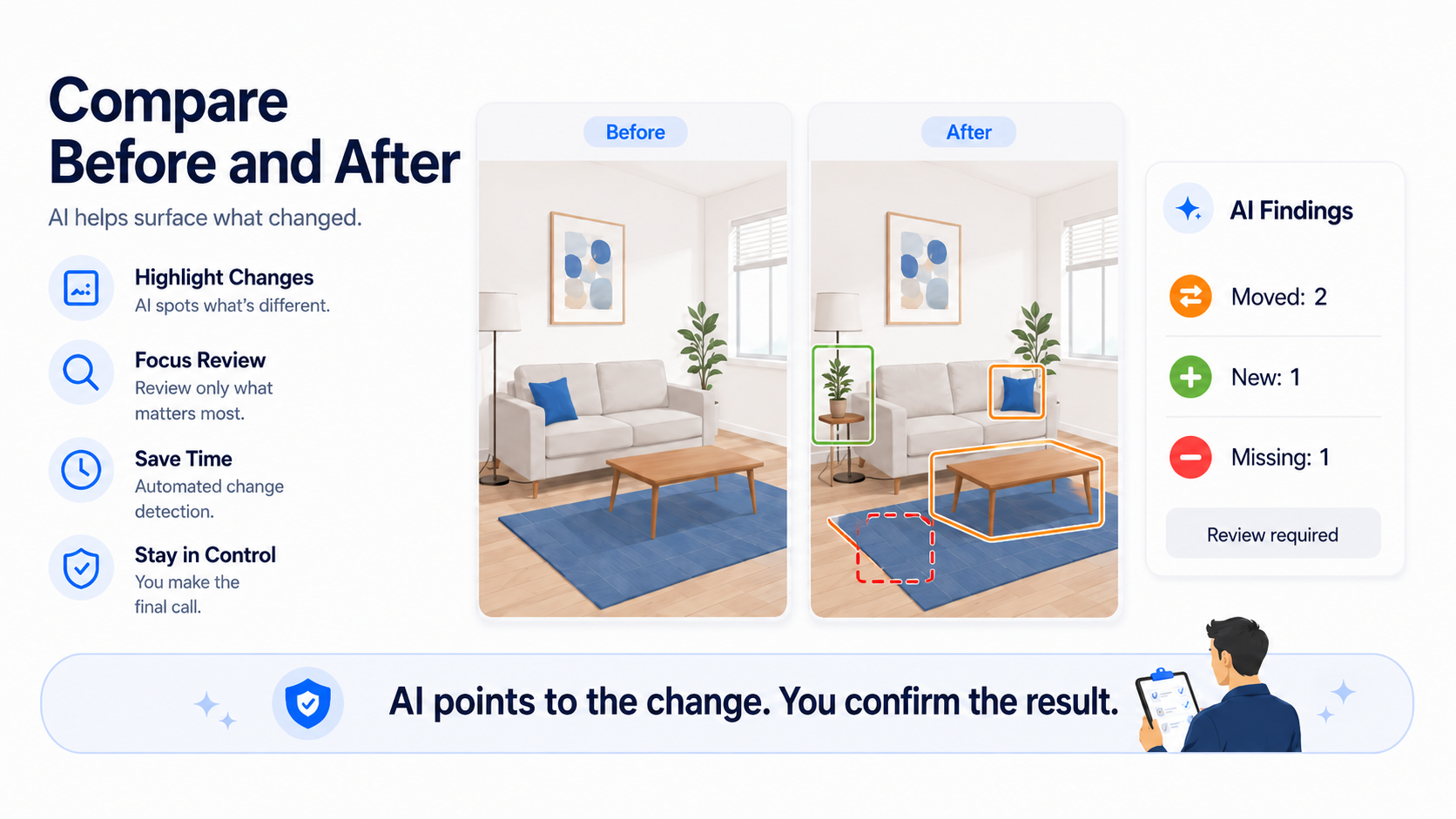
In PropCheckAI, the AI-assisted review is focused on practical visual change categories, such as moved detections, new detections, and missing detections.
This keeps the workflow simple and useful. The app does not need to pretend it understands every object perfectly. It does not need to name every item in the room. It simply helps identify areas where something appears to have changed.
That is enough to save time. The reviewer can then inspect the result, decide whether it matters, and choose whether to include it in the final report.
Moved, new, and missing detections
A strong inspection comparison is about change. PropCheckAI helps organize visual changes into categories that are easy to understand.
Moved detections
A moved detection means something appears in both records, but its position may have changed. It does not automatically mean damage. It simply tells the reviewer the area may need attention.
New detections
A new detection means something appears in the later record that was not clearly present in the earlier baseline. It could be a new object, a new visible mark, or another area that needs review.
Missing detections
A missing detection means something appears in the baseline but not in the later inspection. This can be useful for furnished rentals, included items, accessories, fixtures, or other tracked property details.
These categories make review easier because the user can quickly understand what kind of change the AI is surfacing. The AI points to the change. The human confirms the result.
Why before-and-after structure matters
AI-assisted review works best when the inspection record is structured. If move-in images are random and move-out images are random, comparison becomes harder. The app has less consistency to work with, and the user has more context to interpret manually.
That is why the earlier inspection process matters. A strong baseline helps the AI-assisted review because rooms are organized, images are connected to inspection types, before-and-after records are easier to match, repeated room order improves review consistency, and similar capture angles make changes easier to surface.
This is why PropCheckAI is built around a full inspection workflow, not just a single photo upload. The process matters. The better the inspection structure, the more useful the comparison becomes.
AI can help rank rooms by change activity
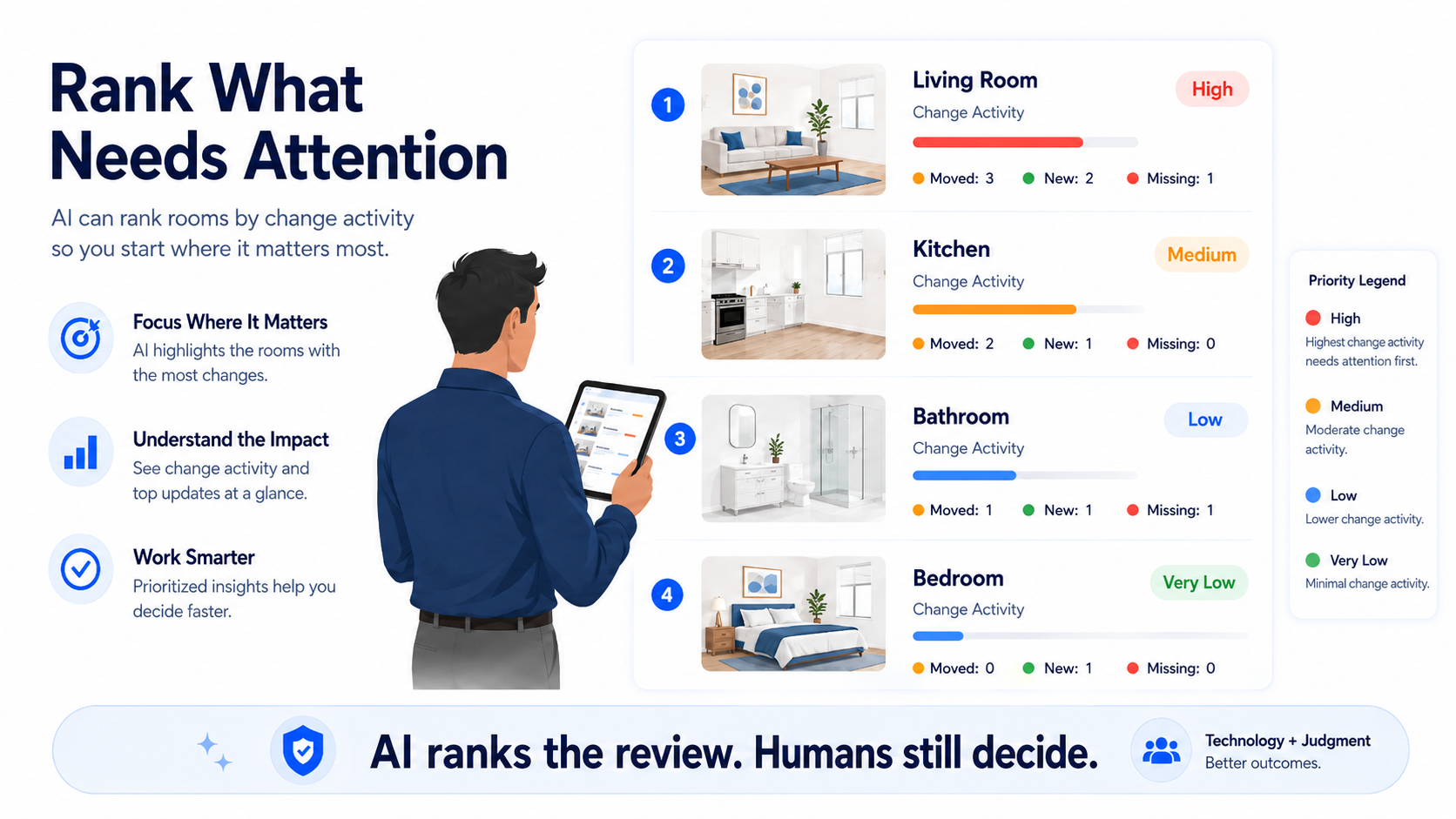
Not every room needs the same amount of attention. Some rooms may show very little change. Other rooms may show multiple moved, new, or missing detections.
AI-assisted review helps by ranking rooms or areas based on change activity. This allows the user to start with the places that appear to have the most changes instead of reviewing every room equally from the beginning.
This is especially useful when reviewing larger properties, furnished rentals, multiple rooms, staff-captured inspections, renter-submitted checkouts, property portfolios, or repeated inspections over time.
A room with many detections should usually be reviewed before a room with little or no change activity. That does not mean low-change rooms are ignored. It means the user gets a better starting point.
AI saves time by reducing search
One of the biggest benefits of AI-assisted review is that it helps reduce search time. Without AI assistance, the user has to hunt through the inspection record manually.
With AI assistance, the app can help surface which rooms, areas, or frames deserve attention. This can help landlords spend less time asking, “Where should I look?” and more time asking, “Does this change matter?”
That is a much better review workflow. The value is not that AI replaces the landlord. The value is that AI helps the landlord get to the important review points faster.
Humans still make the final decision
AI can surface visual changes, but it cannot fully understand the situation. A detected change may be important. It may also be harmless.
For example, a detected change could be a moved item, a new item, a missing item, different lighting, a cleaning item temporarily placed in the room, furniture moved for cleaning, a repaired area, normal property use, a camera angle difference, or something that needs more context.
That is why human review is required. The user should decide whether the detection is meaningful, whether it should be confirmed, whether it should be dismissed, whether a note should be added, and whether it belongs in the report.
This is the right balance. AI assists. Humans decide.
AI-assisted review should not overclaim
AI should be useful without pretending to be a judge. PropCheckAI does not need to claim that AI proves tenant responsibility. It does not need to claim that every detection is damage. It does not need to automatically decide costs, blame, or legal outcomes.
That would be the wrong message. The stronger message is more practical: AI helps review the record faster. That is valuable on its own.
PropCheckAI helps users compare before-and-after records, surface moved, new, and missing detections, rank rooms by change activity, focus review time where it matters, confirm or dismiss findings, and generate organized inspection reports.
The user remains in control of the final review.
AI review feeds into better reports
The final value of AI-assisted review is not just detection. It is turning reviewed findings into an organized report.
After the user reviews the AI-surfaced detections, they can decide what should be included. This keeps the report cleaner and more useful. A good report should not contain every possible visual difference. It should contain the findings the user has reviewed and decided to include.
A stronger AI-assisted reporting workflow looks like this:
Capture the move-in baseline.
Capture the move-out inspection.
Compare before-and-after records.
Surface moved, new, and missing detections.
Rank rooms by change activity.
Review the detections.
Confirm or dismiss findings.
Add notes where needed.
Generate an organized report.
This keeps the workflow practical. The AI helps with review. The human prepares the final record.
What AI does and does not do
PropCheckAI should be clear about what AI-assisted review does not do. AI does not provide legal advice, guarantee dispute outcomes, automatically prove tenant responsibility, automatically calculate charges, replace human review, decide what is normal wear, decide what should be charged, or decide who is responsible.
That is not the job of the AI. The job of AI-assisted review is to help surface changes faster so the user can review them.
PropCheckAI helps with the part of the workflow that is slow and repetitive: comparing records. AI-assisted review can help users identify visual change activity, organize detections into moved, new, and missing categories, review higher-change rooms first, reduce manual search time, focus attention on areas that may need review, keep humans in control of the final decision, and generate cleaner reports after review.
This is where AI becomes valuable. Not because it replaces judgment. Because it reduces the time spent finding what needs judgment.
Final takeaway
AI is not the judge. AI is the review assistant.
PropCheckAI helps landlords compare move-in and move-out records faster by surfacing moved, new, and missing detections, ranking rooms by change activity, and keeping humans in control of the final report.
The app helps answer the first question faster: “Where should I look?” Then the user answers the important question: “Does this matter?”
That is how AI-assisted inspection review should work. Fast enough to save time. Careful enough to keep the user in control.
Important Disclaimer
PropCheckAI helps users create, organize, compare, and review rental inspection documentation. PropCheckAI does not provide legal advice, does not guarantee dispute outcomes, and does not make legal or financial decisions for users. Users remain responsible for reviewing inspection results and deciding how reports are used.